AMERICAN HAUNTINGS INK

Showing posts with label Lemp Mansion. Show all posts

Tuesday, June 3, 2014

AMERICA'S 10 MOST HAUNTED PLACES

COMPILED BY TROY TAYLOR & APRIL SLAUGHTER
Co-authors of the upcoming book, DISCONNECTED FROM DEATH


BELL WITCH CAVE
Adams, Tennessee

Few accounts of ghostly phenomena in American history can compare to that of the Bell Witch. Beginning in 1871 and lasting nearly four years, the Bell family was plagued by disturbing experiences in their home. What began as simple yet inexplicable rapping and scratching noises quickly escalated into violent personal attacks. When the entity responsible for the anguish found its voice, it claimed to be the “witch” of Kate Batts, a former neighbor who’d fostered resentment for John Bell over bad business dealings. John fell ill and would eventually die, all at the hands of the witch who was more than willing to take credit for his demise. The spirit left the family in peace for seven years, only to return to taunt them again for weeks. Whether or not the ghost was the spirit of Kate Batts or something far more sinister, nobody really knows, but it is speculated that when it retreated, it took up residence in a cave close to the Bell home near the Red River. Many who visit the cave today report experiences such as hearing the sound of footsteps, seeing apparitions, and even feeling as though they have been pushed or slapped. Some believe the ghost of Kate Batts is the culprit, while others believe the cave’s famous resident was never a human at all. You can read more about it in "Season of the Witch!" 


WAVERLY HILLS SANATORIUM
Louisville, Kentucky

This massive structure was built in 1926 to house and treat patients afflicted with tuberculosis; a disease that gripped much of the nation, but was particularly prominent among the residents of Louisville. Hundreds of patients were admitted and treated for the disease, but many of them did not survive. Treatments were not only painful and usually ineffective, they were often deadly. Bodies were removed via the “bloody chute” which was a tunnel leading from the back of the building down a hill to a railway where they were kept out of site of the surviving patients. By 1943, advances in medicine had nearly eradicated the disease in the U. S. and the sanatorium closed. A year later, it was re-opened as the Woodhaven Geriatrics Sanitarium and would remain in operation until 1982, when conditions and budget cuts led to mistreatment and the neglect of patients and the state of Kentucky shut it down permanently. Waverly Hills has exchanged hands a number of times over the years, but one thing remains constant… visitors to the building continually experience a wide range of paranormal phenomena from hearing disembodied voices, feeling an ominous presence, to seeing shadow figures move from room to room. With so much and death and suffering that occurred within its walls, is it any wonder that the sanatorium is considered one of the most haunted locations in the country? Read more about this location in “Haunting of America!”


THE MYRTLES PLANTATION
Near St. Francisville, Louisiana

This plantation was originally built in 1794, and in the many years since, has become a home of ghostly legend. The most famous of which tells of a jaded house slave named Chloe, who – knowingly or not – poisoned her master’s wife and children. Another tale includes the tragic death of previous owner William Winter, who was shot on the porch of the house and then wounded, made his way into the house and up the staircase to the 17th step where he collapsed and died in the arms of his beloved. While stories such as these would certainly support the claims of paranormal activity within the home, they are unfortunately untrue. No record exists of Chloe, and those she allegedly poisoned all died at different times from yellow fever. William Winter was indeed shot, but died immediately and did not stumble into the house. Even so, there are a few ghosts of the Deep South that have made The Myrtles their home. The apparition of an African American woman wearing a green bonnet has been seen (and photographed) on the premises. Children are often seen playing in and around the house and peering into windows. The grand piano on the first floor often plays on its own, only to stop as soon as anyone enters the room to investigate. The legends of The Myrtles may not be accurate, but one thing remains true… it is a home with a deep history that continues to haunt visitors to this day. Read more about this location in “Haunting of America!”


THE LEMP MANSION
St. Louis, Missouri

The Lemp family began building their empire in the beer brewing business in St. Louis in 1838. Driven and quite successful, the Lemps enjoyed many prosperous years in the industry, but with success also came hardship. Death would first visit the family when it came for William Lemp Sr.’s eldest son, Frederick. In 1901, and at only 28 years of age, his health rapidly deteriorated and he passed away, leaving his father completely devastated. Ultimately unable to pull himself out from underneath the sadness, William retired to his room in the family home on the morning of February 13, 1904 and shot himself with a .38 caliber revolver.  His daughter Elsa Lemp Wright would follow in his footsteps in 1920 after struggles with a rocky marriage and the decline of the family business. The Lemp plant was eventually sold to the International Shoe Co., which devastated William Lemp, Jr. By December 1922, Will had slipped into a terrible depression and social withdrawal and he too took his own life in the Lemp family home. The remaining Lemp brothers, Charles and Edwin, were largely involved in other ventures, but tragedy would reduce the family yet again. In May of 1949, Charles was found dead in the home he’d loved, a victim of a self-inflicted gunshot wound. Edwin passed away at his estate in Kirkwood at the age of 90 in 1970. The family home was sold after Charles’ passing, and while it briefly served as a boarding house, it fell into disrepair until 1975, when it was purchased and remodeled as a restaurant and inn by Dick Pointer. During renovation, the Pointer family experienced phantom footsteps and voices in the house. Restaurant staff have reported seeing apparitions appear and vanish at will, glasses inexplicably flying from the shelves, and hearing the bar piano play entirely on its own. In 1980, an article appearing in LIFE magazine named the Lemp Mansion as “one of the most haunted houses in America.”  Discover the full history in “Suicide &Spirits!”


THE BATTLEFIELDS OF GETTYSBURG
Gettysburg, Pennsylvania

Famous haunts across the country attract large numbers of ghost hunters every year, but few of them can compare to the allure and reputation of Gettysburg. Three bloody days of battle during the Civil War in June of 1863 resulted in a large number of casualties, and this small town was ill-prepared to handle the fall out. Nearly one third of all the soldiers engaged in battle here were dead by the end of the third day; a catastrophic loss leaving bodies strewn in all directions. The wounded were treated in homes and businesses that were made into makeshift hospitals while the dead were exposed to and rotted in the Pennsylvania summer heat. The suffering and death that occurred in the fields, in local homes, and the surrounding areas has left a lasting impression on the land, as is evident by the sheer number of paranormal encounters that are experienced and recorded here. It is said that when the ladies of Gettysburg traveled through town following the battle, their only relief from the overwhelming stench of death were scented handkerchiefs pressed tightly to their faces. “Phantom smells” of peppermint and vanilla are experienced by visitors even to this day. Apparitions seem to frequent homes and various other buildings, disembodied voices and the sounds of war still linger in the air. The most active location in Gettysburg is an area called The Devil’s Den. Visitors find it difficult to keep their electronic gear up and running, as inexplicable failure is common here. Many people have often encountered an unkempt man amongst the boulders, who approaches to speak with them and suddenly vanishes. Soldiers are seen, gunfire is heard, and the weight of the devastation that occurred here is quite often felt. Those who visit the battlefields of Gettysburg come hoping for an encounter with those on the other side… and few are disappointed. Discover the many stories of Gettysburg in “Soldiers& the Supernatural!”


THE STANLEY HOTEL
Estes Park, Colorado

This beautiful and historic hotel, which sits in the picturesque community of Estes Park, has been home to ghostly activity experienced by staff and guests alike for years. Famed writer Stephen King was so impressed by the hotel that it became the inspiration behind his novel The Shining. No one knows exactly when the activity began in the hotel, or why, but experiences have long been a part of the hotel’s mystique. Nearly every room has been host to one phenomenon or another, though most of the activity seems to occur on the fourth floor. Guests often report that items are inexplicably moved in their rooms, and children are heard at odd hours running and playing in the hallways. F.O. Stanley (of Stanley Steamer fame) and his wife Flora opened the hotel in July of 1909, but neither seem to have left it behind. It is not unusual for guests and staff to briefly encounter F.O. walking through the lobby, and the sound of the piano playing on its own in the Music Room is often attributed to Flora. The beauty and comfort of the Stanley Hotel attracts hundreds of people every year; more, if you count those who remain unseen.


THE WINCHESTER MYSTERY HOUSE
San Jose, California

Haunted houses are interesting, but there aren’t any in existence that can compare to the oddity of the Winchester Mystery House. The story begins with the birth of Sarah Pardee in 1839 to a family in New Haven, Connecticut. At the age of 23, Sarah married William Wirt Winchester, heir to the Winchester rifle empire. Life seemed to be going well until disaster struck four years later. Sarah had given birth to her first and only child, Annie, but the infant fell ill and passed away a mere nine days later. Sarah drew inward from the loss, and struggled to regain a balanced emotional footing. In 1881, Sarah lost her husband William to pulmonary tuberculosis, which only added to her agony. Urged by a friend to visit a Spiritualist medium for guidance, Sarah was told that a terrible curse loomed above her family for all of the deaths the Winchester rifles had been responsible for. The medium relayed to Sarah that her husband wished for her to move on and build a home she could inhabit with the spirits of those who’d lost their lives to the weapon. In order to remain living, Sarah needed to keep construction on the home constant. If she ceased, she would die. Sarah and her vast fortune moved west, eventually settling in California’s Santa Clara Valley in 1884. She purchased an existing six bedroom house resting on 162 acres and immediately began construction on her new home. As time passed, the house continued to grow. Crews worked round the clock to add entire wings, doors that were joined to windows. There were countless staircases that led nowhere; a blind chimney that stop short of the ceiling; closets that opened to blank walls; trap doors; double-back hallways; doors that opened to steep drops to the lawn below; and dozens of other oddities. Sarah also maintained a connection to the spirits in her home by communing with them in a séance room she had constructed for that purpose. After one such session on September 4, 1922, Sarah retired to her bedroom where she passed away at the age of 83. The mansion is now a California Historical Landmark, and many believe that the spirits Sarah worked so hard to appease still occupy the house. Inexplicable footsteps, banging doors, strange lights and cold spots are just a few of the things reported to have occurred in the home over the years.  Read more about this location in “Haunting of America!”


BACHELOR’S GROVE CEMETERY
Chicago, Illinois

This cemetery sits on land first set aside for burial in 1844. Now largely abandoned and sheltered by trees on the edge of the Woods Forest Preserve, this piece of land has become fairly well known for the accounts of paranormal phenomena it has produced over the years since the last recorded burial in 1989. Problems arose in the 1960s when vandalism and decay descended on the cemetery. Headstones were broken, stolen, and defaced. Caskets were unearthed and bones strewn about the ground. Rumors of occult rituals taking place also began to surface. Today, the cemetery is unkempt, overgrown, and surrounded by a large chain link fence, which has proven to be a poor deterrent for anyone determined to enter the premises. The apparition of a horse has been seen emerging from a small stagnant pond near the rear barrier of the cemetery, pulling a plow and driven by the ghost of a man who had allegedly drown when the horse plunged into the pond, dragging him under. The apparition of a woman wandering aimlessly around the cemetery, holding an infant has been a common sight, though she seems unaware (or perhaps disinterested) in interacting with anyone who encounters her. The surrounding area seems to be equally active, as phantom vehicles have appeared only to vanish on the nearby roadway. For several decades, individuals have reported the appearance of a phantom farm house appearing and disappearing from sight in various locations nearby as well. Many cemeteries are often rumored to be haunted; the phenomena experienced at Bachelor’s Grove leave little doubt that it is.  Read more about this location in “Haunting of America!”


YORKTOWN MEMORIAL HOSPITAL
Yorktown, Texas

Tucked away in a small south Texas town sits a privately owned vacant building that was once the Yorktown Memorial Hospital. Built in 1950 and operated by the Felician Sisters of the Roman Catholic Church, the hospital remained in operation until it closed its doors in the late 1980s. It is reported that close to 2,000 people passed away in the building, and over the years, stories of strange occurrences have poured out from within its walls. Caretakers of the property often see and hear sounds emanating from within, as though the hospital were still in working order. Women crying out as if in labor, the groans of individuals in a great deal of pain, disembodied conversations, and shadowy figures moving from room to room are commonly experienced. Investigators who have repeatedly visited the building report encountering spirits who have identified themselves on several occasions and seem to recognize them upon their return, engaging in lengthy conversations via Electronic Voice Phenomena (EVP) and the use of Instrumental Transcommunication (ITC) devices. Orbs of light (seen with the naked eye) have been witnessed moving about the halls and doorways of Yorktown, and the activity within is no less active in the daylight hours than it is at night. While no one knows exactly what sets this hospital building apart from any other, one thing remains clear… Yorktown is one of the most consistently active paranormal locations in America. Read about this location in April's "Ghosthunting Texas!"


THE VILLISCA AX MURDER HOUSE
Villisca, Iowa


On the morning of June 10, 1912 the bodies of eight individuals were discovered bludgeoned and blood-soaked in the Moore family home in the tight-knit community of Villisca. J.B. Moore, his wife Sarah, their four children Herman, Catherine, Boyd, and Paul were all murdered, their skulls crushed with an ax, along with Lena and Ina Stillinger, two young girls who had spent the night. J.B. Moore’s brother Ross had been alerted by neighbor Mary Peckham who became concerned about the family’s well-being when she realized there was no activity in the usually busy home. Ross’ discoveries of the bodies sent the community reeling, as nothing quite like this had ever happened in their town before. News spread quickly, and soon the house was overrun with those curious about the murders, which likely destroyed whatever evidence there might have been. While there were several suspects in the case, it was unfortunately never solved and remains a mystery to this day. In the years that have passed since the grisly discovery, the Moore home has had various owners and tenants, but in 1994 it was purchased and restored as closely as possible to its original condition by Darwin and Martha Linn. Individuals who have stayed in the house have reported waking to the sound of children’s voices when there were no children present at the time. Children’s laughter, moving objects, and strange banging sounds are just a few of the experiences many have had in the Villisca Ax Murder House. Read the true story of the Villisca Ax Murders in “Murdered in their Beds!” 


Wednesday, February 13, 2013

The Death of William Lemp


THE DEATH OF WILLIAM LEMP
The First Suicide in the Tragic Beer-Brewing Family

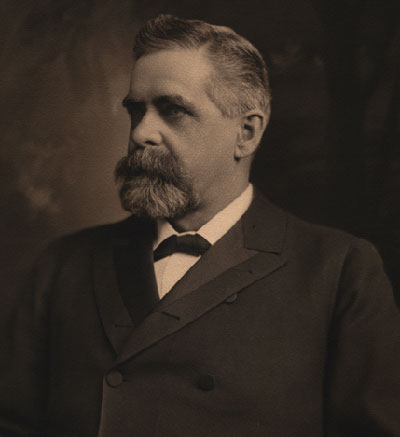
On this date, February 13, 1904, William Lemp, the patriarch of one of America’s greatest beer-brewing families, committed suicide in his home, which was located just down the street from his magnificent brewery.

William Lemp
Just a dozen years before, the Lemp brewing empire had reached the summit of its greatness. The size, growth and phenomenal wealth of the business had the family looking with great anticipation toward the new century. They believed, for good reason, that only greater success was coming their way in the 1900s. New construction and renovation were constantly being carried out at the brewery. By the turn of the century, William Lemp had installed a pipeline between the stockhouse and the bottling plant that was unlike anything else in the industry. Fellow brewers, and general tourists, came from around the country to see the pipeline, which had been encased and insulated so that beer could be transported to the bottling machines without any loss of quality or flavor. The new conveyance system was just one of many of William’s modern marvels.

By this time, the brewery covered eleven city blocks if the count included the extensive shipping yards that were located along the Mississippi River. It was producing over five hundred thousand barrels of beer every year with annual sales of more than $3.5 million. The Lemps employed 550 men, with another 650 men working in other departments. The brewery was producing six brands of beer, many of them award-winning, including Tip Top, Standard, Extra Pale, Tally, Culmbacher and, of course, Falstaff. They used more than 600 refrigerated railcars to get the beer to the marketplace and shipped it throughout America and to ports around the world.


 The future certainly looked bright for the company and for the Lemps themselves as the new century dawned – but in truth, their future was anything but bright. One December 12, 1901, Frederick Lemp, the heir apparent to the Lemp throne, died of heart failure at the age of 28. His father learned of the news by telegram and while the family was shocked, William was devastated. Brewery secretary Henry Vahlkamp later wrote, “…suddenly the grief of the father was most pathetic. He broke down utterly and cried like a child. It was the first death in the family. He took it so seriously that we feared it would completely shatter his health and looked for the worst to happen.”

Frederick Lemp
William Lemp was never the same after the loss of his favorite son. The events that followed Frederick’s death became the first indication that the once-mighty empire was beginning to fall apart.

 William Lemp had always been a volatile and passionate man, even though, as a good German, he kept most of those feelings bottled up inside. Those hidden feelings were what made him a good businessmen and his drive for success was what changed the Lemp Brewery from a small, moderately successful local company into a giant national business that had become a force to be reckoned with in the brewing industry. He was a man of great passion, capable of excitable highs, and as his family and friends soon discovered, horrific lows, as well.


When Frederick died in December 1901, William plunged into an abyss of despair. His family and close associate Henry Vahlkamp feared that he might never come out of it. William’s friends and even his employees at the brewery said that he was never the same after Frederick died. It was obvious to all of them that he was not coping well and he began to slowly withdraw from the world. He was rarely seen in public and chose to walk to the brewery each day by using the cave system beneath the house. Before his son’s death, William had taken pleasure in personally paying the men each week. He also would join the workers in any department and work alongside them in their daily activities or go among them and discuss any problems or questions they had. He took great pleasure in teasing the chiefs of the various departments at the brewery, asking them questions that seemingly had no connection to the business of the day. In order to answer, his men had to not only keep the immediate record on their minds, but they also had to know something about the entire history of their department. After Frederick died, these playful practices ceased almost completely. When he did visit the different departments, it was apparent that he was just there to pass the time. William was distracted and disinterested and his joking manner and quick smile were absent.

The Lemp family mausoleum at Bellefontaine Cemetery in St. Louis
This went on for nearly two years. William had ordered the construction of a grand mausoleum for his family on Propsect Avenue in Bellefontaine Cemetery, where the city’s captains of industry were buried. It was the largest in the cemetery and cost $60,000, an amount worth over $1.6 million today. Frederick had been laid to rest there and William frequently visited the tomb. Eventually, he seemed to find a little peace and hints of a return to his former self began to appear in his manner. He finally seemed to be coping with the death of his favorite son, but it was not meant to last.

Lemp family friend, Frederick Pabst, the Milwaukee brewer. The two families were closely tied together by friendship and marriage. Hilda Lemp had married Frederick’s son, Gustav, and Frederick Lemp had been named after his father’s close friend. 

On January 1, 1904, William Lemp suffered another crushing blow with the death of his close friend, Frederick Pabst. This loss made William even more withdrawn and soon he became indifferent to the details of running the brewery. Although he still came to the office each day, he paid little attention to the work and those who knew him said that he seemed nervous and unsettled. It began to seem as though his physical and mental health were beginning to decline.
By February 13, 1904, his suffering had become unbearable.

That morning seemed to be an ordinary one for William Lemp. He arose at his customary hour of 7:00 a.m. and took his time in his personal bathroom, which included a barber’s chair, a marble tub and a massive glass-enclosed marble shower stall that was the first of its kind in St. Louis, which William had imported from an Italian hotel for his own use. After dressing, he ate breakfast but remarked to one of his staff that he was not feeling well. Rather than go to the brewery, he excused himself and went back upstairs to his bedroom.

At 9:30 a.m., William shot himself in the head with a .38 caliber Smith & Wesson revolver. There was no one else in the house at the time except for the servants. Julia had gone downtown to do some shopping and Billy and Edwin, the only children in St. Louis at the time, were already at work at the brewery.

A servant girl, upon hearing the sound of the gunshot, rushed to the door but she found it locked. She immediately ran to the brewery office and summoned Billy and Edwin. They hurried back to the house and broke down the bedroom door. Inside, they found their father lying on the bed in a pool of blood, a bloody wound in his right temple and the revolver still gripped in his right hand. At that point, William was still breathing but unconscious.

One of the boys telephoned the family physician, Dr. Henry J. Harnisch, who came at once. He was soon followed by Dr. Henry Schulz, Dr. Andrew Harscher and Dr. Herman L. Nietert, the former head of the city hospital. They quickly examined William but they knew there was nothing that could be done for him. Dr. Nietert pronounced the wound fatal and waited next to William’s bed until death came to claim him.
Meanwhile, one of the staff had managed to reach Julia Lemp at a downtown department store and her driver rushed her home. She arrived only moments before her husband’s succumbed to his wound. He was pronounced dead at 10:15 a.m.

William had been dressed for work when he ended his life and there was nothing to suggest that he had made any preparations for suicide, or that he had even contemplated it. There were rumors that he had written a letter detailing his plans and bidding farewell to his family, but this was not the case. There was no suicide note. While it is likely that William took his own life in a fit of depression, there is no way that we will ever know for sure. The motives that he hid deep in his heart will always remain a mystery.

A short time after the shooting, the Lemp home was closed to everyone but relatives and those who had been summoned by the family. Brewery employees were posted at the front of the house to intercept callers and newspaper reporters, who flocked to the scene when word spread of the tragedy. All of the curtains were drawn and the mirrors were draped in black. A dark silence settled on the house, which might have appeared vacant if not for the grim-faced brewery workers who were stationed outside.

Billy and Edwin refused to speak to the newspapermen who had gathered. Edwin returned to the brewery office for a short time in the afternoon but he turned away everyone who came to offer condolences. He did confirm through his assistant that his father had committed suicide and the only explanation that he could give was that he was despondent over the deaths of his son and his friend, Frederick Pabst. Henry Vahlkamp agreed with Edwin and added:

Mr. Lemp had been looking extremely bad for some time. When he came back from the funeral of Captain Pabst, he was a changed man. They were lifelong friends and the relations between them were very close – so much so that Mr. Lemp felt the death of Captain Pabst as keenly as that of his own son three years ago.

   I remember when he received word of Fred’s death how he went into street and paced up and down. I walked with him and tried to console him, but it was useless. The death of Captain Pabst brought the former trouble back on his mind. He brooded over these matters constantly. I exchanged greetings with him yesterday and noticed that his condition was the same as it had been ever since his return.

   Funeral arrangements began to be made the following day and family members had to be tracked down from all corners of the world. Charles was in Chicago and bought a ticket on the first train returning home. Annie was on a tour of the Orient and her husband, Alexander, was in Europe. Hilda and Gustav rushed to St. Louis from Milwaukee when the news reached them. They were accompanied by Elsa, who was in Milwaukee for a visit. Louis was on his way back from a trip to Japan and his steamship was due to arrive in San Francisco on February 16. He finally arrived home, along with Annie, after the funeral had already taken place.

The Lemp Mansion
Services were held in the Lemp mansion on February 14. The body was placed on display in the south parlor, next to the conservatory, which was filled with plants and flowers. Before the funeral took place, more than one thousand Lemp employees filed through the house to view the body and pay their last respects. The brewery had been closed for the day. Once the long stream of men, some openly weeping, had departed, family members and friends gathered for a simple memorial service conducted by Dr. Max Hemple of the German Ethical Society. 

After the service, a cortege of forty carriages traveled to Bellefontaine Cemetery. Julia, Elsa and Hilda were too grief-stricken to go to the burial ground. Eight men who had worked for William for more than thirty years served as pallbearers and honorary pallbearers included many notable St. Louis residents, including Adolphus Busch, the owner of the Anheuser-Busch brewery, who had liked and respected his principal competitor. William was placed inside the family mausoleum next to his beloved son, Frederick.

There is no question that William J. Lemp left an indelible mark on the city of St. Louis and the history of American brewing. He was well liked, admired and praised by not only his friends and the people of St. Louis but by his competitors, as well. He was a modest and unpretentious man who did business fairly and honestly. He could dine with the cream of St. Louis society and drink a beer with the lowliest worker on his payroll and get along famously with both. His employees saw him as not only a good boss but as a man that they knew they could go to for aid and advice. Even though most people didn’t know it – because it was not his way to speak of his own virtues – William gave away immense sums to charity each year and never thought of his generosity as anything special. He was a fine man but one who allowed his grief and pain to get the better of him, ending a good life before its time.

According to his will, dated February 1, 1904, William left his entire fortune to Julia. The will read:

I, William J. Lemp, hereby make, publish and declare this to be my last will and testament, hereby revoking all previous wills. I direct the payment of my debts and the closing of administration on my estate as rapidly as the law will permit.

I give, bequeath and devise to my wife, Julia, all my property, real and personal or mixed, wheresoever situate or whatsoever title held, absolutely.

I make no gift her to my children, Annie L. Konta, William J. Lemp, Louis F. Lemp, Charles A. Lemp, Hilda L. Pabst, Edwin A. Lemp, and Elsa J. Lemp, and I make no gift here to my grandchild, Marion Lemp, having perfect confidence that my wife will without any request on my part, and none such is here made, will do best for them.

I hereby appoint William J. Lemp, Jr., Louis F, Lemp, Charles A. Lemp, Edwin A. Lemp or either or any of them that may accept and qualify my executor or executors without bond.
In witness whereof, I have hereunto set my hand this 1st day of February, 1904.

[signed] William J. Lemp

At the time of his death, the brewery was estimated to have been worth about $6 million and William’s personal estate was valued at $10 million.

The complete, true story of the Lemp family, their brewing empire and the ghost stories that have surrounded the family mansion in St. Louis, see my book SUICIDE & SPIRITS: THE TRUE STORY OF THE RISE AND FALL OF THE LEMP EMPIRE. You can get autographed editions from thewebsite and it’s also available as a Kindle edition. 

Saturday, December 29, 2012

A Bullet for Billy...

ANOTHER TRAGIC LEMP FAMILY SUICIDE

On this day in 1922, the owner of what was once one of the greatest brewing empires in St. Louis history, William “Billy” Lemp II, took his own life in the office of what is now best-known today as the Lemp Mansion.

Billy Lemp


The Lemp Brewing Company, and the family that founded it, came to prominence in the middle 1800s as one of the premier brewers of St. Louis. For years, they were a nationally known beer-maker, a fierce rival to Anheuser-Busch and the first brewers of lager beer in the region. Today, the Lemps are largely forgotten, remembered more for the grand and mysterious house in which they once lived than for the beer they brewed.

The Lemp Mansion, as the house is commonly known, is a monument and memorial to decadence, wealth, tragedy and death. Perhaps for this reason, there is a sadness that hangs over the place and an eerie feeling that has remained from its days of horror, disrepair and abandonment. It has since been restored as a restaurant and inn, and yet the sense of sorrow seems to remain. By day, it is a thriving restaurant, filled with people and activity, but at night, after everyone is gone and the doors have been locked tight, something walks the halls of the Lemp Mansion.

Are there ghosts here? Are they the restless spirits of the Lemp family, unable to find rest? Quite possibly, for this unusual clan was as haunted as their house is purported to be. They were once one of the leading families in St. Louis but all that would change and their eccentricities would eventually lead to their ruin.

The Lemp Brewing Company had a long history in St. Louis, dating back to the arrival of German immigrant Adam Lemp, who first introduced the city to lager beer. The company thrived for decades, but the family was marked by tragedy, including the death of Frederick Lemp, who had been groomed to take over the family, the 1904 suicide of patriarch William Lemp, and the 1920 death of Elsa Lemp. Billy Lemp had taken over the running of the company after the suicide of his father, but never had the same interest in it that his father had. He continued to grow the business, however, but then, around the same time that Elsa died, Prohibition came to America, which meant doom for most American brewing companies.

Like most brewers of the time, Billy was stunned by the developments that led to the coming of Prohibition and the passage of the Volstead Act, which gave Prohibition its teeth by making it enforceable by law. Again, like so many others, Billy never really believed that beer could ever become illegal. Thanks to this, he was totally unprepared for the news that came in January 1919 that the sale, consumption and manufacture of alcohol would come to an end in one year.

Some brewers, notably Anheuser-Busch, began to immediately work on other projects, like ice cream, baker’s yeast and soft drinks. Others, like the Lemp Brewery, faltered along for a time with no clear plans for the future. Finally, Billy decided to follow the lead of some of the other breweries and produce a beverage known as “near beer,” which would duplicate the real thing in all aspects except for the alcohol content. Near beer proved somewhat popular at first, but once Prohibition was in full swing, those who continued to drink found it easy to obtain the real thing from their neighborhood bootlegger. Demand for near beer became non-existent and production largely came to a halt.

The Lemp Brewery’s near beer never even lasted until the start of Prohibition. The company’s non-alcoholic malt brew was called Cerva, and it was said to be quite good. While Cerva sold moderately well, revenues from it were never going to be enough to cover the overhead of the entire plant. Production of Cerva was suspended in June 1919. Soon after, Billy closed the doors of the Lemp factory for good.

The Lemps were not in need of money. All of the remaining family members were extravagantly wealthy independent of their brewery profits and they lacked any real incentive to try and keep the company going. Recent years had been tough for the brewing industry. With the backlash against German-American brewers caused by the war, and the propaganda spread by Prohibition advocates, sales had been low. Billy never saw the need to upgrade the brewery facilities and unlike his father, he was not interested in modern techniques that would have made the aging place more efficient. The end had likely been coming for some time before Prohibition, but the new law signed the brewery’s death warrant.

A Recent photograph of the Lemp Brewery. It still stands near the mansion today, although it has not been used to make beer since 1919. 


The brewery was closed without notice. There were no farewell ceremonies and employees only learned of the factory’s closing when they arrived for work one day to find the doors and gates chained and locked. An era in St. Louis brewing history had come to an end.

While Billy never had the kind of incentive to keep the business going that his father had, he never dreamed that the work of a lifetime would soon become illegal in the land that had embraced his family and allowed them to live the American dream. He was bitter, angry, and most of all he felt betrayed. Prohibition broke his spirit and with this death of his sister, the baby of the family who had always been everyone’s favorite, Billy simply had nothing left.

“We have done nothing since Prohibition. I am tired of seeing all the weeds in the courtyard and the dust upon the windows,” he said in the spring of 1920. “I am out of the brewery business for good. I am 54 years old and it is time to quit.”

The family brewing empire, built by his father and his grandfather before him, had fallen. Now, as the brewery sat idle and neglected, Billy felt that he had no choice but to sell off everything. Beer was likely never coming back, he thought, and if it did, he just wasn’t sure that he cared anymore.

A bottle cap (author’s collection) from a bottle of original Lemp beer. After the logo was sold to Joseph Griesedieck, he replaced the Lemp name with “Falstaff” but kept the familiar shield design. 

Billy sold off the Lemp beer logo and the company’s most popular name brand, Falstaff, to Joseph “Papa Joe” Griesedieck, who was sure that someday, perhaps soon, the American people would realize that Prohibition would never work and it would be repealed. Eventually, he was right and “Falstaff” endures to this day with the Lemp name gone from the famous shield logo and “Falstaff” in its place.

But Billy Lemp no longer shared his friend’s enthusiasm for the brewing business. He told his secretary and friend, Henry Vahlkamp, on several occasions that even if beer production ever resumed, the business would never be the same. He saw no point in hanging onto the aging hulk of a brewery that was down the street from the Lemp offices and decided to put it up for sale. In 1919, the brewery had been valued at $7 million, but three years later, when it came time to auction it off, it was worth only half that amount.

Billy hired the Joseph P. Day auctioneering company to handle the sale, which went to great lengths to advertise that fact that one of the world’s great manufacturing plants would be sold, in parts or as a whole, to the highest bidder. The company prepared a detailed 12-page booklet that described the huge complex and praised it as a first-rate facility that could be adapted to many industrial uses. The booklet contained many photographs and detailed drawings of the brewery’s eighteen buildings. A map was also included, which covered what were the plant’s fourteen acres in 1922.

The brewery had been almost self-sufficient during its heyday, with full-time carpentry, masonry and painting shops. All of these were highlighted in the booklet, as well as the benefits of other structures, some containing more than one million square feet of space. Others boasted twenty-five foot ceilings and the proximity to railroad spurs and the Mississippi River.

The Lemp Brewery had stopped production in 1919, but the factory itself had been built to last forever with heavy stone foundations, solid brick walls, cast-iron columns and steel girders. Some of the buildings stood six stories high and modern electric elevators had been installed throughout the property, including in the eighteen gigantic grain storage bins. Even after sitting unused and nearly abandoned for several years, the brewery was still better equipped and more advanced than many that were still in use in St. Louis and across the Midwest.

The auction was held at 2:00 p.m. on Wednesday, June 28, 1922. On that day, the magnificent brewery was sold off in parts to five companies, with the bulk of it going to the International Shoe Company (whose name remains on one of the old brewery smokestacks today) for the disappointing sum of only $585,000. Even though he didn’t need the money, Billy had planned to recoup at least twenty-five or thirty percent of the brewery’s worth from the sale. He was stunned to receive such a paltry amount. “How would anybody feel to get eight cents on the dollar for a great plant like that?” Billy questioned. “They told us that when Prohibition came that we could make something out of our plants, but look what happened.”

The months that followed the sale of the brewery were difficult ones for Billy. He had watched his family’s company crumble before his eyes and with the sale of the famed Lemp logo and Falstaff name, followed by the auctioning off of the brewery; he had managed to destroy everything that his father and grandfather had worked so hard to build. Billy knew that he would never want for anything for the rest of his life and that his fortune would remain intact, but the responsibility that he felt for the brewery’s loss weighed heavy on his shoulders. He became depressed and his friends and employees began to speak of his erratic behavior. He often complained of poor health and feeling nervous.

Then, in the late fall of 1922, Billy seemed to rally and began feeling better. He began making plans to rid himself of the last vestiges of the Lemp brewing business once and for all. He told friends that he intended to liquidate the corporation and sell off the corner saloon sites and the rest of the real estate associated with the brewery. After that, he would sell some of his other property holdings and just “take it easy for a while.” Billy decided to put his country house on the market for $175,000, stating that he planned to take an extended trip to Europe with his wife.

Billy was still having days of illness during the holiday season of 1922, but he seemed better than he had been. His plans for shedding some of his business concerns had reinvigorated him and he began making preparations to be away from the office during his upcoming trip. His employees noticed Billy was smiling again as he walked into the office in the morning – which made what happened on December 29 both tragic and inexplicable.

When company secretary Henry Vahlkamp arrived at the brewery offices, located in the former Lemp family home, at 9:00 a.m. on December 29, 1922, he found Billy was already there. The two of them were joined shortly after by Olivia Berchek, a stenographer for the brewery and Billy’s personal secretary.
Vahlkamp later recalled that Billy’s face was flushed that morning and that when he entered his employer’s office, Billy had an elbow on the desk and was resting his forehead on his hand. He asked Billy how he was feeling and the other man replied that he felt quite bad.

“I think you are looking better today that you did yesterday,” Vahlkamp noted in an effort to cheer him up.

“You may think so,” Billy said glumly, “but I am feeling worse.”

Vahlkamp left and went to his own office on the second floor of the converted mansion. Moments after this exchange, Miss Berchek telephoned Billy’s second wife, Ellie, about instructions for the day’s mail and as she was speaking to her, Billy picked up the other line and spoke to his wife himself. The secretary recalled that he spoke very quietly and she did not hear what turned out to be his last words to his wife. After he finished the conversation, Bercheck asked him a question about some copying that she was doing from a blueprint. He first told her that what she had was fine and then he changed his mind and suggested that she go down to the basement and speak to the brewery’s architect, Guy Norton.

While she was on her way downstairs, she heard a loud noise. Because there were men working in the basement, she thought nothing of it, assuming that someone had dropped something. But when she came back upstairs, she found Billy lying on the floor in a pool of blood. She told the police, “The porter heard the noise from down in the basement and came upstairs; he was the only one who realized it [the noise] was a shot.”

The porter came into the office to find Billy lying on the floor with his with his feet under the desk. He called for help and men from the office across the hall came in as he was placing a pillow under Billy’s head. Billy was gasping for air when his employees came rushing into the office.

Apparently, just after speaking to Miss Bercheck, Lemp had shot himself in the heart with a .38 caliber revolver. He had unbuttoned his vest and fired the gun through his shirt. Vahlkamp, who hurried into the office when he heard the news, arrived to find Billy barely alive. He sent for the police and the coroner’s physician but by the time the doctor arrived, Billy was dead.

Officer John H. Schramm, one of the first policemen to arrive on the scene, told a reporter for the St. Louis Star that Billy had apparently dragged a heavy chair from its usual place in the office to a space about four feet between his desk and the west wall. Billy evidently sat down in the chair before shooting himself. He was discovered after he slid out of the chair lying on his back with his revolver at his side.

Officers found two bullet wounds in the left side of his chest, about a half-inch apart. Since there were two discharged shells in the gun’s chamber, it was initially thought that a second shot might have been fired by accident as Billy’s hand jerked. However, the inquest later determined that only one of the two shells had been recently fired, indicating that Billy left the other chamber empty as a precaution since he normally carried the gun in his pocket.  Captain William Doyle of the Wyoming Street Police Station, the lead police investigator on the scene, searched Lemp’s pockets and desk for a suicide note, but as with his father and possibly his sister before him, Billy left no indication as to why he had ended his life.
  
When interviewed by the newspapers, Billy’s close friend, August A. Busch, said he was confused by Billy’s suicide. He noted that had recently decided to sell off many of his real estate assets, including his home, Alswel, and relax for a few months. A week before he shot himself, Billy had dined with Busch, who said that Billy seemed “cheerful” at the time and that he gave no indication that he was worrying about business or anything else. “He was a fine fellow,” Busch added, “and it is hard to believe that he has taken his own life.”
  
Billy’s son, William Lemp III, however, was not as shocked as everyone else was. He rushed to the office when he heard what had happened and knelt down on the floor next to his father’s body. “You knew I knew it,” he sobbed. “I was afraid this was coming.” He refused to explain his remarks to the police.

Ellie Lemp collapsed when she received the news of her husband’s suicide. She did not go to the Lemp office that day and declined to accept visitors at the Chase Hotel, where the Lemps had been living since placing their home on the market.

When interviewed after the shooting, many of Billy’s friends and employees mentioned Billy’s erratic behavior, dating back many years. Their recollections painted a picture of a man with serious mood swings and often-violent behavior, which seemed to indicate that he suffered from manic-depressive episodes, or what we would consider today to be bipolar disorder. Such a condition, unknown to medicine at the time, would certainly explain the collapse of Billy’s marriage, his sometimes-vicious temper and then the calm, orderly manner in which he would carry out his business. His moods often varied between times of happiness and periods of dark depression. Everyone assumed that his melancholy was caused by the death of his sister Elsa and the loss of the brewing business, but it’s more likely that it was a chemical imbalance (possibly affecting several members of the family) that led to Billy’s unusual behavior and eventual suicide.

In the weeks before his death, Billy had been admitted to the hospital three times, complaining of what he called “nervous chills.” His secretary, Olivia Berchek, said, “….he was very morose… he was always peculiar about things, very precise and for the last three or four weeks he didn’t seem to care. He didn’t fight back at anything. He just let everything go, contrary to his former attitude toward things; and on Thursday afternoon, he said to me, ‘I have had enough doctors, haven’t I?’ Later he said, ‘Don’t you think I have had enough trouble? I have had about enough.’”

The Lemp Mansion on the day of Billy’s funeral in 1922.

Billy’s funeral was held at the family mansion on December 31. The offices were used as the setting for the service for sentimental reasons, staff members said, having been used for the funerals of Billy’s parents years before. He was interred in the family mausoleum at Bellefontaine Cemetery, in the crypt just above that of Elsa’s.

Billy’s bad financial luck followed him to the grave. The house, Alswel, which had been built for $125,000 in 1914, was auctioned off in May 1925 for $118,500 to a Chicago real estate broker. All of the furnishings went with the house, as well as the 192 acres that surrounded it. Billy’s estate, valued at a little less than $1 million in 1923, was divided between his widow and his son. By the end of the 1920s, the Lemp company, once one of the largest breweries in the country and a worldwide purveyor of beer, was largely forgotten.

With the factory sold, Billy gone and his brothers and sisters involved in their own lives and endeavors, the days of the Lemp empire had come to an end at last. His two siblings remaining in St. Louis, Charles and Edwin, had left the family enterprise long before it had breathed its last. Charles worked in banking and finance and Edwin had entered a life in seclusion at his estate in Kirkwood in 1911. The fortune they had amassed was more than enough to keep the surviving members of the family comfortable through the Great Depression and beyond.

But the days of Lemp tragedy were not yet over.


This story is an excerpt from Troy’s book, SUICIDE & SPIRITS: THE TRUE STORY OF THE RISE & FALL OF THE LEMP EMPIRE. It’s available by clicking here as an autographed print edition. It’s also available as both a Kindle and Nook edition.